Contract manufacturing
We offer you our machinery as an extended workbench.
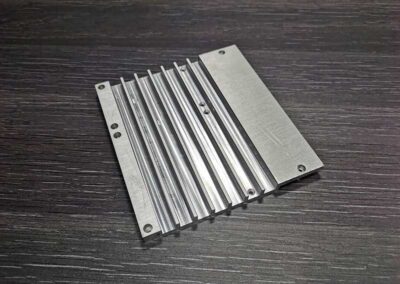
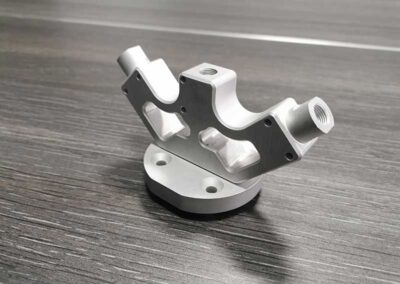
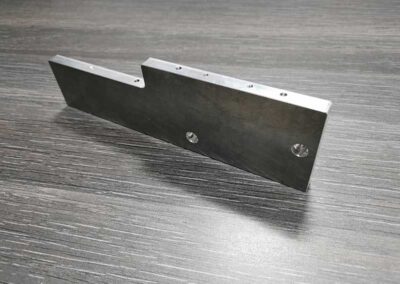
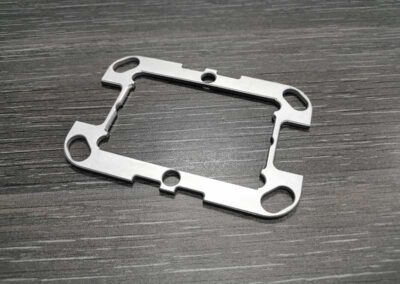
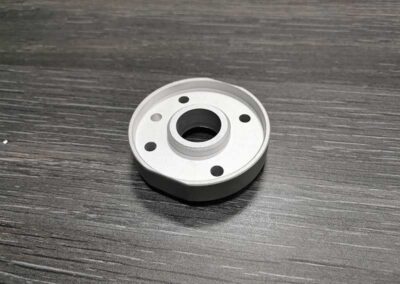
Daub CNC Technik manufactures workpieces made of aluminum and plastic quickly and easily. The production of single parts up to large series from extruded profiles with max. Length of 6000 mm and metal sheets up to 2000 x 3000 mm are our strength.
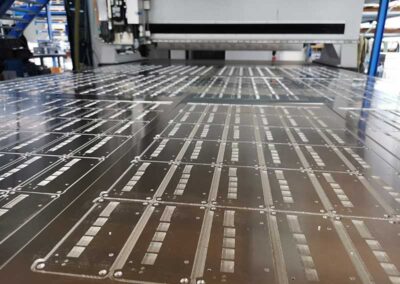
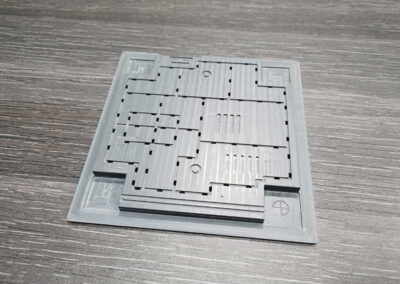
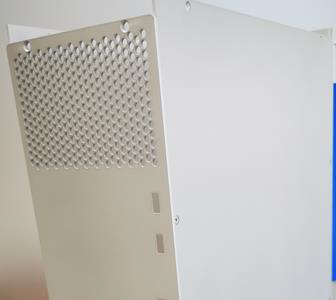
HSC (High-Speed-Cutting) milling on our 3-axis portal milling machines with a possible speed of 60000 rpm enables us to provide economical machining of the highest quality. With this form of machining, even the smallest contours or engravings can be produced. We consistently use the latest technologies with our CAD systems for data preparation and CAM for programming. Vacuum clamping technology allows us to produce filigree sheet metal work such as milled pockets, countersinks, chamfers, radii and threads without deformation and without changing the structure of the base material.
Our extensive aluminum stock allows us a short response and manufacturing time of your products. Likewise, you can provide us with your material with your individual specifications for processing. We are your contact for contract manufacturing of sheet metal milled parts – from prototypes to series. For manufacturing we need 2D DXF data or 3D Step data.
Manufacturing capabilities
Screen printing
We screen print according to your specifications in RAL, Pantone or HKS shades. Our modern screen printer of the company ESC in connection with high quality printing inks guarantees an optimal printing quality on a max. Area from 700×600 mm.
Advantages in screen printing
- A high opacity
- Durable and extremely
- hard-wearing print results
- Predestined for high print runs
- High color brilliance
- suitable for light colors
- on dark backgrounds
Screen printing is a printing process in which the printing ink is printed with a rubber squeegee, through a fine-mesh textile screen onto the material to be printed. At the ink-tight areas of the fabric where no ink is to be printed, the mesh openings of the fabric are closed ink-tight by a stencil.
Digital printing
Unlike screen printing, digital printing does not require a fixed printing plate. Digital printing also known as NIP (Non Impact Printing) or DDP (Direct Digital Printing), is an inexpensive and time-saving printing process. Small print runs can be implemented with artwork directly from the computer without any intermediate steps.
Laser marking
Limitless design possibilities with laser marking. A particularly fast, flexible and abrasion-resistant process for the customized surface design of aluminum without additional tooling costs, additives and solvents.
Press-fit technology with press-fit connectors
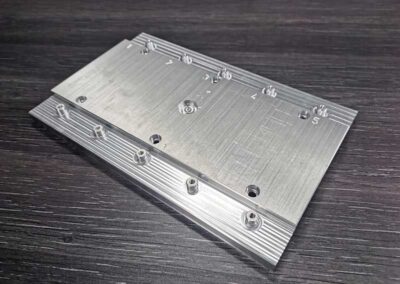
Press-in fasteners are pressed into core holes of the workpiece. The material flows by cold forming into an undercut in the shank area of the fastener. Serration or a special head shape prevent the fastener from twisting. In doing so, they ensure strong mounting points and high push-out and twisting forces without damaging the material or causing bulges in the edge area. The fasteners close flush on the back of the materials. Press-fit connections are reliable, durable and economical.
Passivation of aluminum
We offer our customers passivation of aluminum plates and piece profiles. The chromate layer produced provides optimum corrosion protection and is a good adhesion base for further coatings. This coating provides optimum corrosion protection and at the same time serves as an adhesion primer for adhesives, paints and powder coatings in further processing. In addition, it has a low electrical surface resistance, with which low contact resistances are achieved during contacting. To obtain a uniform surface, aluminum plates are degreased and pickled in advance.
Sandblasting / glass bead blasting
The principle of glass bead blasting is the same as sand blasting. Due to the round shape of the abrasive, the surface is less roughened and obtains a silky glossy and homogeneous appearance. Drawing strips of extruded profiles are completely laminated.
The actual effect of glass bead blasting is created by the „impact“ of the beads on the surface. Due to the spherical shape, there is very little or no erosion on the surface. At the same time, the surface thickens and solidifies, providing an optimal pretreatment for anodizing.
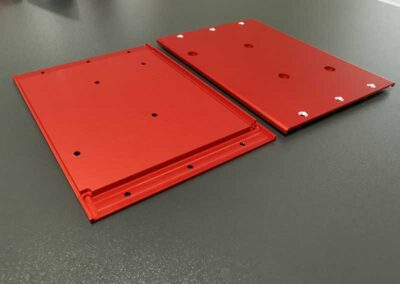
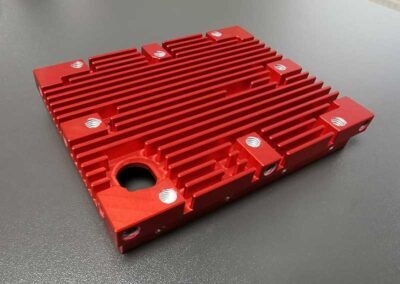
Key Facts of the product series
Alternative coating solution to anodizing
Excellent adhesion with no color change after:
- DIN EN ISO 9227 – Corrosion tests in artificial atmospheres – Neutral Salt Spray (NSS) test: 1,000 hours
- Condensation water test according to DIN EN ISO 6270-2 CH: 240 hours
- Punching, milling, press-fitting, and thread cutting are possible after coating
- Excellent resistance to a wide range of chemicals
- Suitable for screen printing, UV printing, and digital printing – even after 14 days of storage
- Surface appearance and gloss comparable to anodized finishes
- Cross-cut adhesion classification GT0 (after 10 days in a condensation climate with 99% relative humidity at 40°C) according to DIN EN ISO 2409
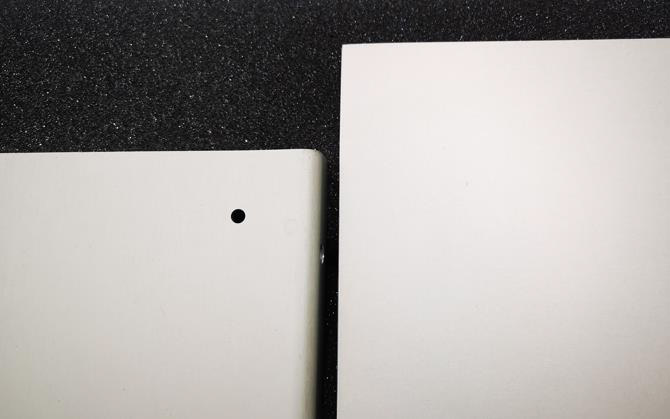
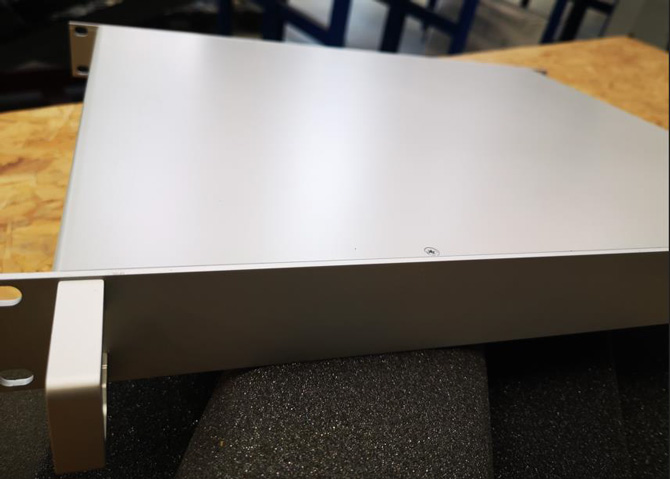
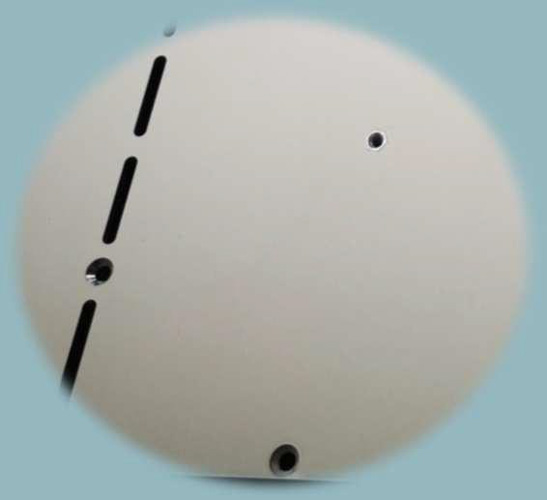
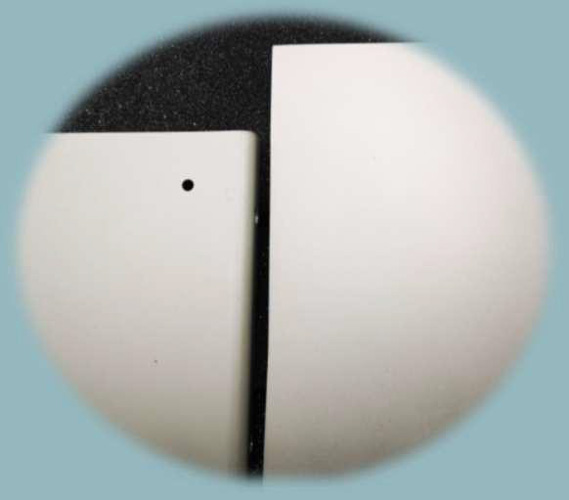
Key Facts - wet paint coating
Technical product information
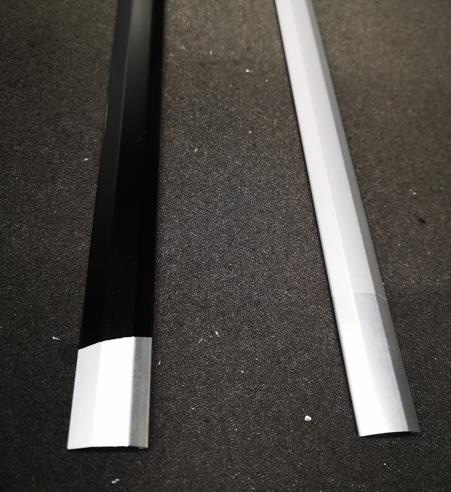
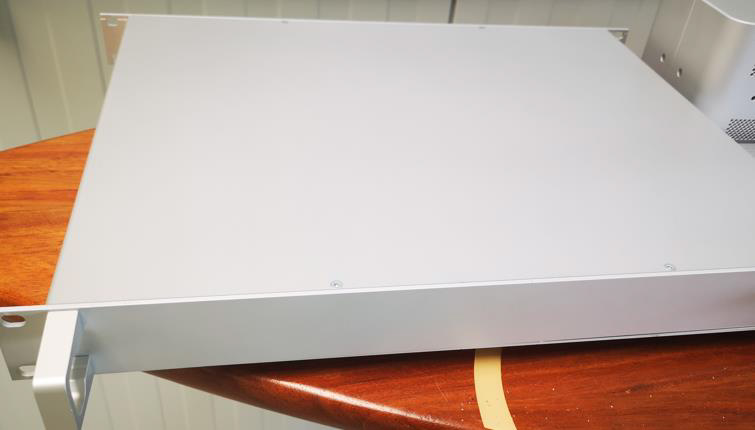
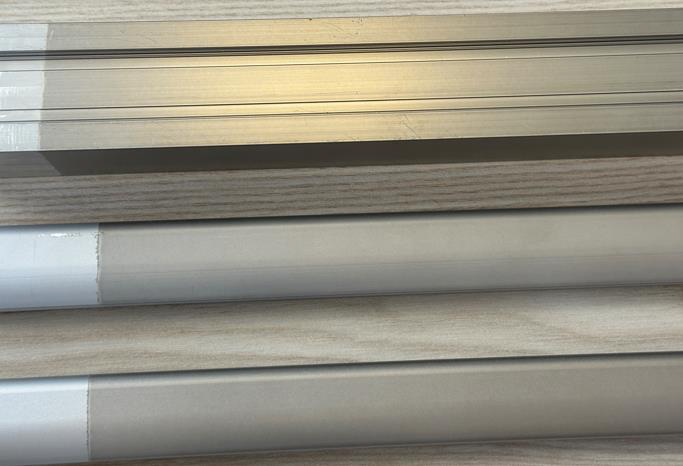
- High-quality, solvent-based 2K polyurethane clear coat as an alternative to anodizing, and for coating anodized surfaces
- Available in various gloss levels and color options (clear and black)
- High hardness and scratch resistance, excellent weather resistance, and very good resistance to solvents and a wide range of chemicals
- Applied by conventional high-pressure spray application using a 1.2–1.7 mm nozzle at 2 bar, optionally with ESTAelectrostatic application
- Guaranteed color matching with anodized finishes
| weco-PUR-2K-Lack | 145231378110 |
|---|---|
| Description: | Alternative to anodized coatings Translucent black, matte |
| Solids content [wt.%] | approx 45.5 % |
| Hardener | 10400001569 |
| Mixing ratio | 3:1 |
| Pot life | 2 hrs at 20°C |
| Drying: | 30 min @80°C |
| ESTA compatible | OK |
| Recommended coating thickness | 30-50 μm |
| Gloss level (60°) | 15–25 GU |
| Solvent content (SDB) | 1.7% |
| VOC value (directive: 2010/75/EU) | 550g/L |
| Coverage m²/kg @150μm | approx 8,0 m²/kg |
Verified manufacturing processes
- Proven compatibility with CNC machining
- Screen printing and UV printing, even after 2 weeks of storage
- Milling
- Drilling
- Digital printing, even after 2 weeks or extended storage periods
- Bending (not recommended)
- Punching and press-fitting
- Thread cutting
- Color and gloss matching
Preliminary test results
Test Report: 14523138110 on passivated aluminum
Customer: Daub
Project: Anodizing Replacement TA2025/102015
Objective
To evaluate the performance of the 14523138110 anodizing replacement coating on passivated aluminum sheets supplied by Daub with regard to resistance against condensation and salt spray exposure.
The tests were conducted in accordance with the following standards:
- Condensation water constant climate test according to DIN EN ISO 6270-2, followed by a cross-cut adhesion test (GT)
- Neutral Salt Spray (NSS) test according to DIN EN ISO 9227
Test Procedure
The coating was applied in accordance with the Technical Product Information (TPI) and conditioned at room temperature for 7 days prior to testing. After exposure, the test specimens were visually inspected and evaluated.
Results
After 240 hours, corrosion at the scribe and coating undercutting were found to be within specification. The coating continues to meet the requirements after 600 hours of exposure. Therefore, testing of the specimen is ongoing.
Conclusion
The coating successfully meets the requirements of:
- 10 days (240 hours) of constant condensation climate testing according to DIN EN ISO 6270-2
- 240 hours of Neutral Salt Spray (NSS) testing according to DIN EN ISO 9227
The next phase of testing will determine whether the coating also withstands 1,000 hours of Neutral Salt Spray (NSS) testing.
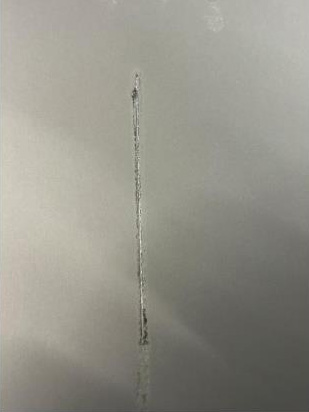
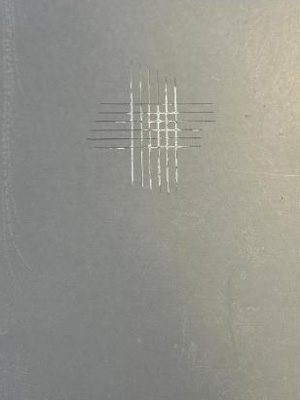
Test report
Test report: 14523138110
Customer: Daub
Project: Anodizing Replacement
- Objective
Development of a high-quality coating as an alternative to anodizing, offering excellent chemical and mechanical properties with a satin-matte finish for suitable aluminum substrates. - Results
The weco 2K Clear Coat 14523138110 system was extensively tested on degreased, pickled, and titanium-passivated aluminum substrates supplied by Daub Oberflächentechnik GmbH & Co. KG.
Additional Testing of 14523138110
1,000-hour Neutral Salt Spray (NSS) Test
The duration of the Neutral Salt Spray (NSS) test was extended from 240 hours to 1,000 hours to determine the coating’s maximum performance under prolonged corrosion exposure.
Conclusion
The weco 2K Polyurethane Clear Coat 14523138110 is highly suitable as an alternative to anodizing on appropriate aluminum substrates. It offers outstanding surface characteristics combined with an attractive satin-like appearance.
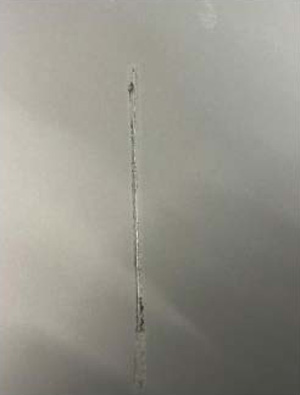
Figure 1:
14523138110 after 1,000 hours of Neutral Salt Spray (NSS) testing
| Test | Result |
|---|---|
| Color & Surface | i.O. |
| Scratch Test | i.O. |
| Adhesion | GT0 |
| Surface after 10 days of condensation water exposure | i.O. |
| Adhesion after condensation water exposure | GT0 |
| Surface after 240 h NSS | i.O. |
| Adhesion after NSS | GT1 |
| Surface after 1000 h NSS | i.O. |
| Chemical Resistance | i.O. |
| Surface Printability | i.O. |
Advantages compared to anodizing
- More energy-efficient (lower electricity consumption)
- More environmentally friendly (reduced wastewater generation)
- Conserves resources (no fresh water required and reduced chemical consumption)
- Corrosion resistance comparable to hard anodizing in the Neutral Salt Spray (NSS) test
- Excellent color stability (black)
- Partial coating can be applied easily, including one-sided coating
- More cost-effective, depending on the component geometry
- Catalog
Discover our entire product portfolio online!
In the Daub CNC catalog, you’ll find precision CNC components, current offers, and all technical details at a glance – always up to date and available anytime.